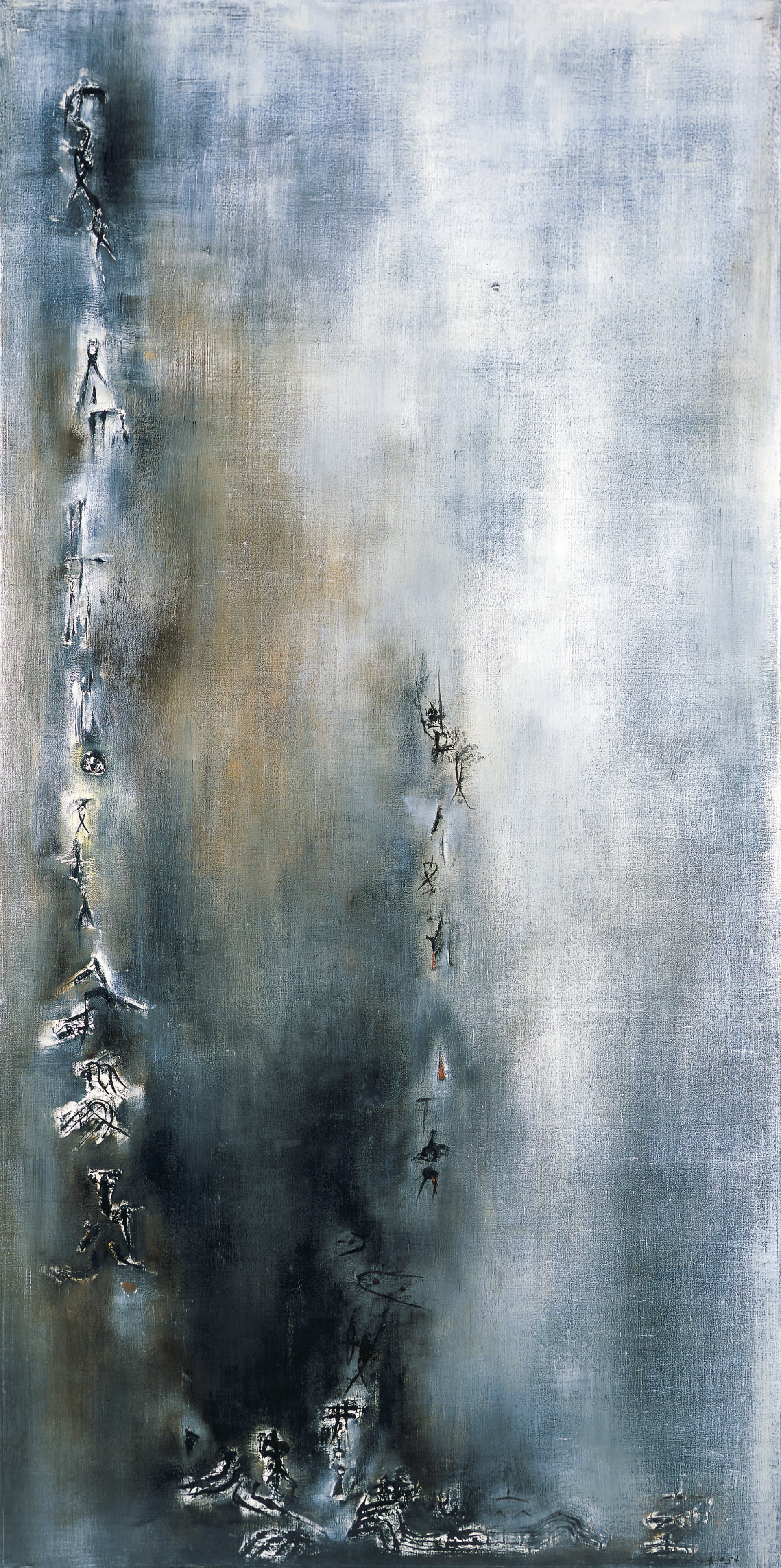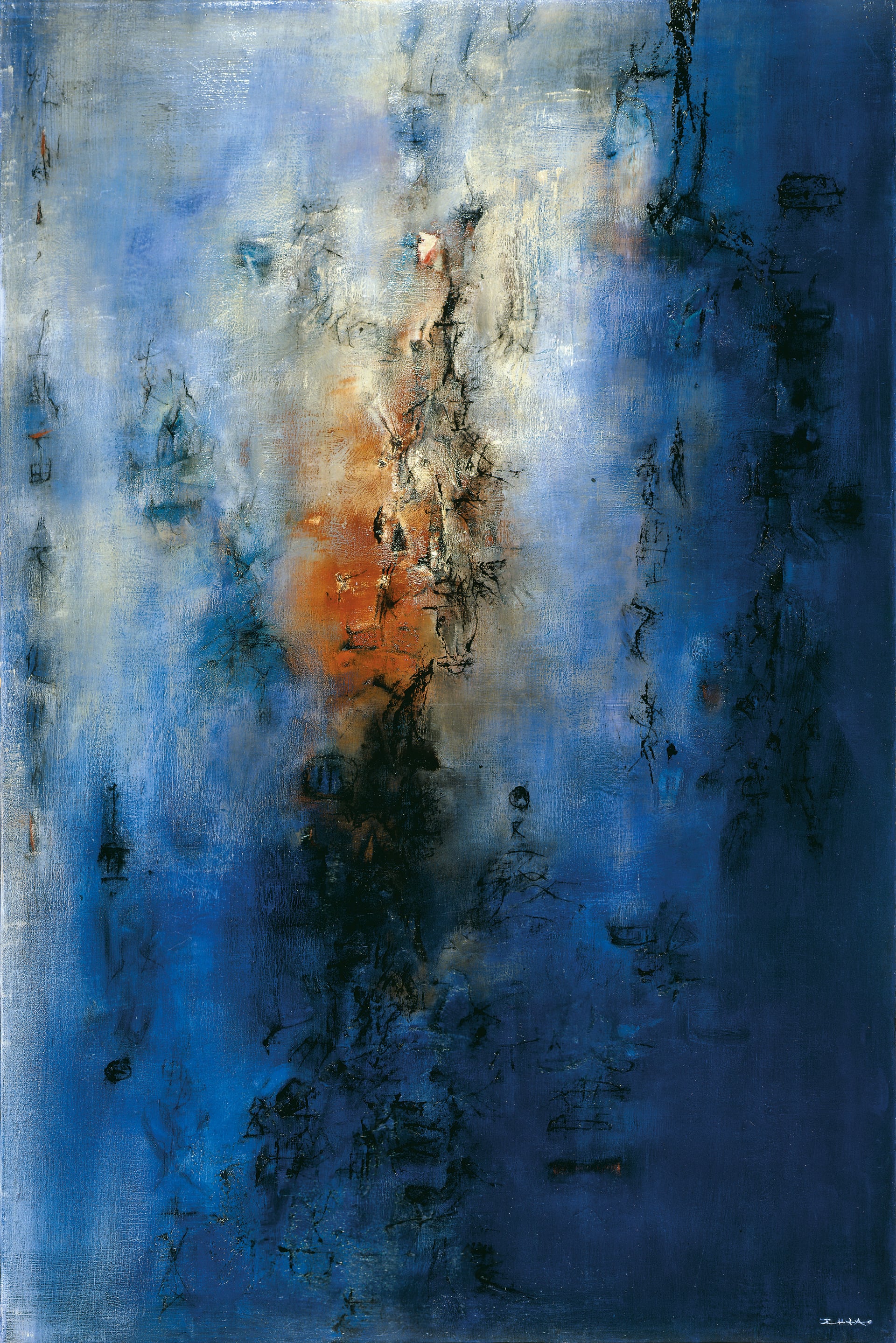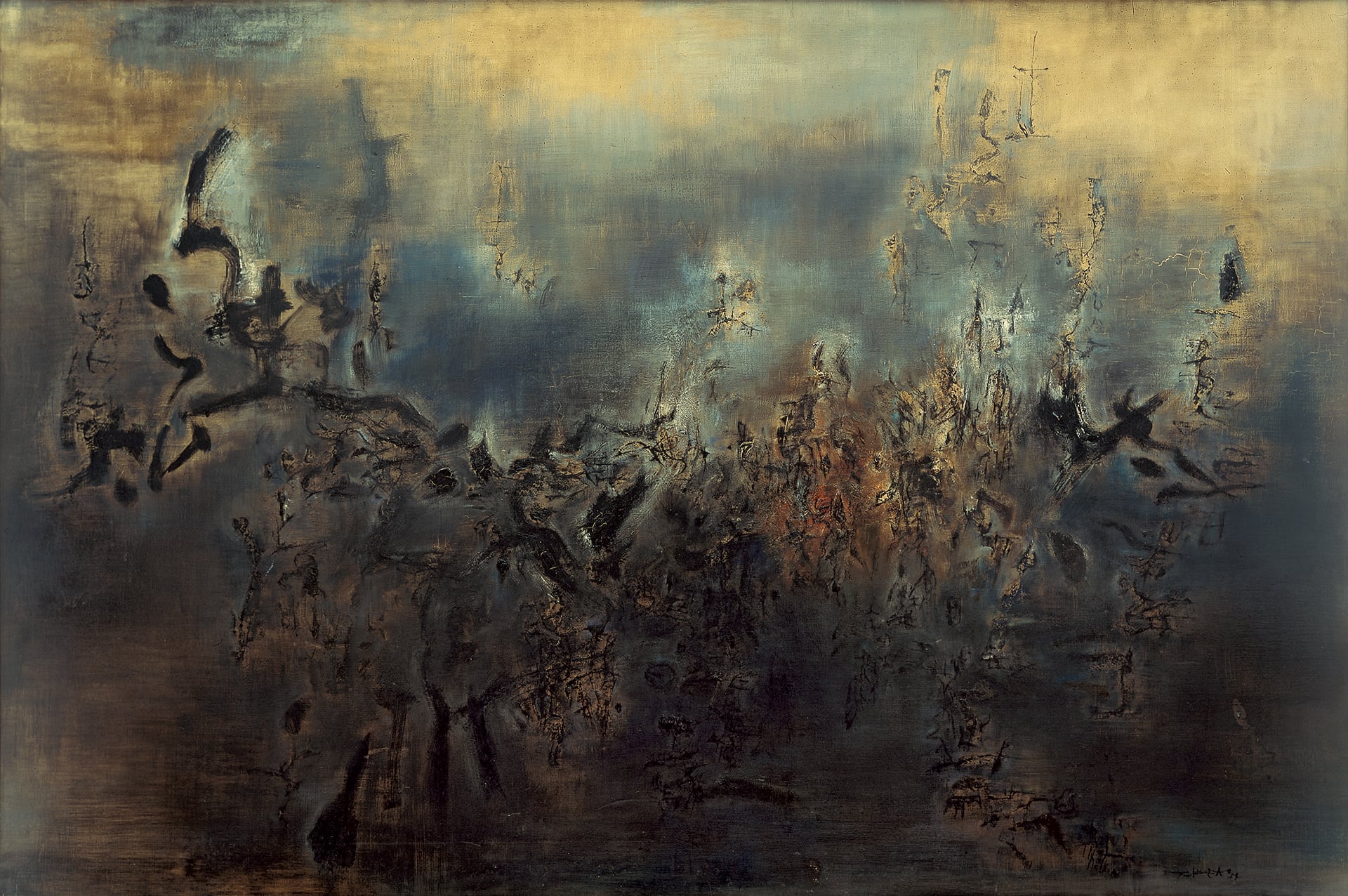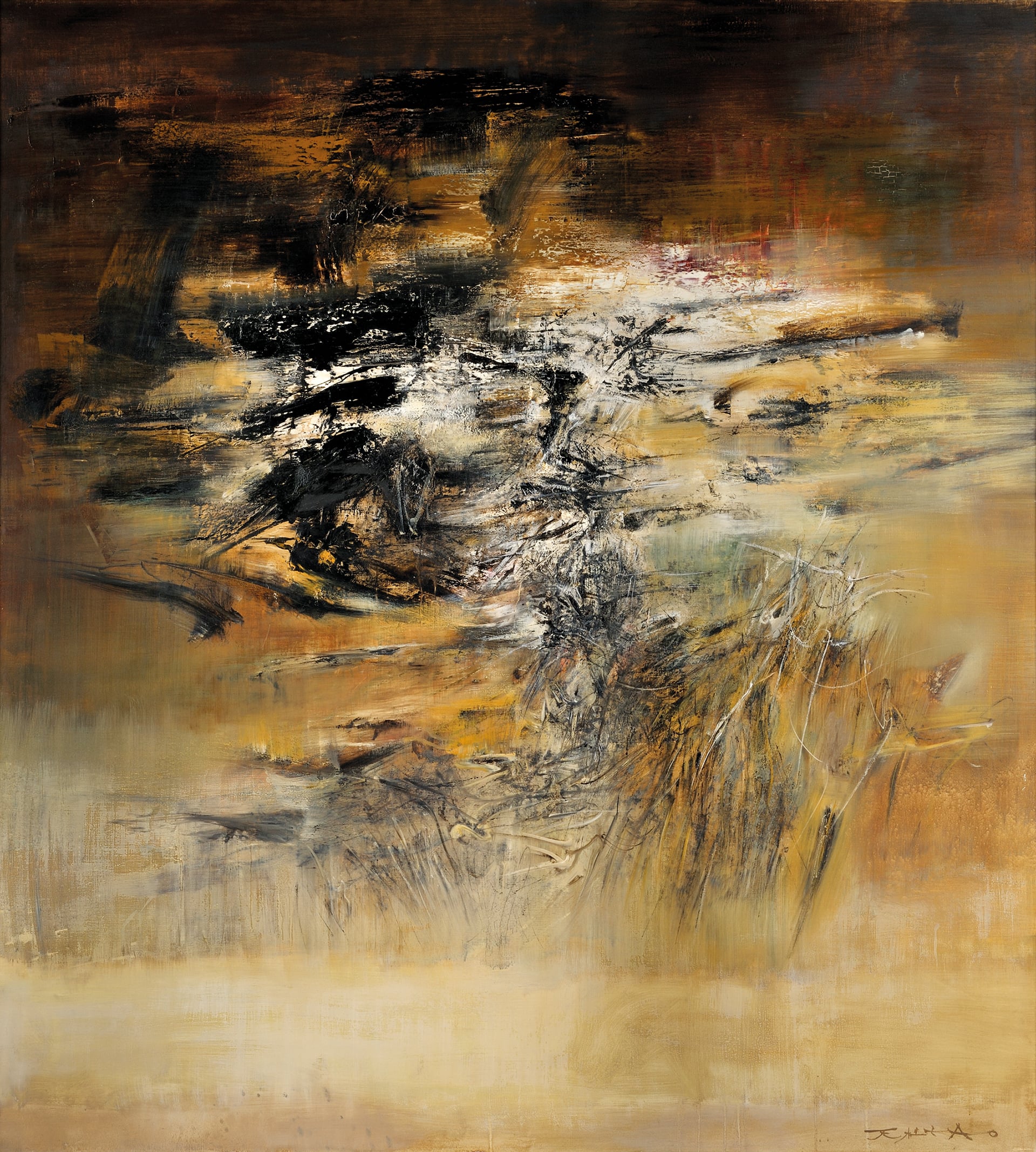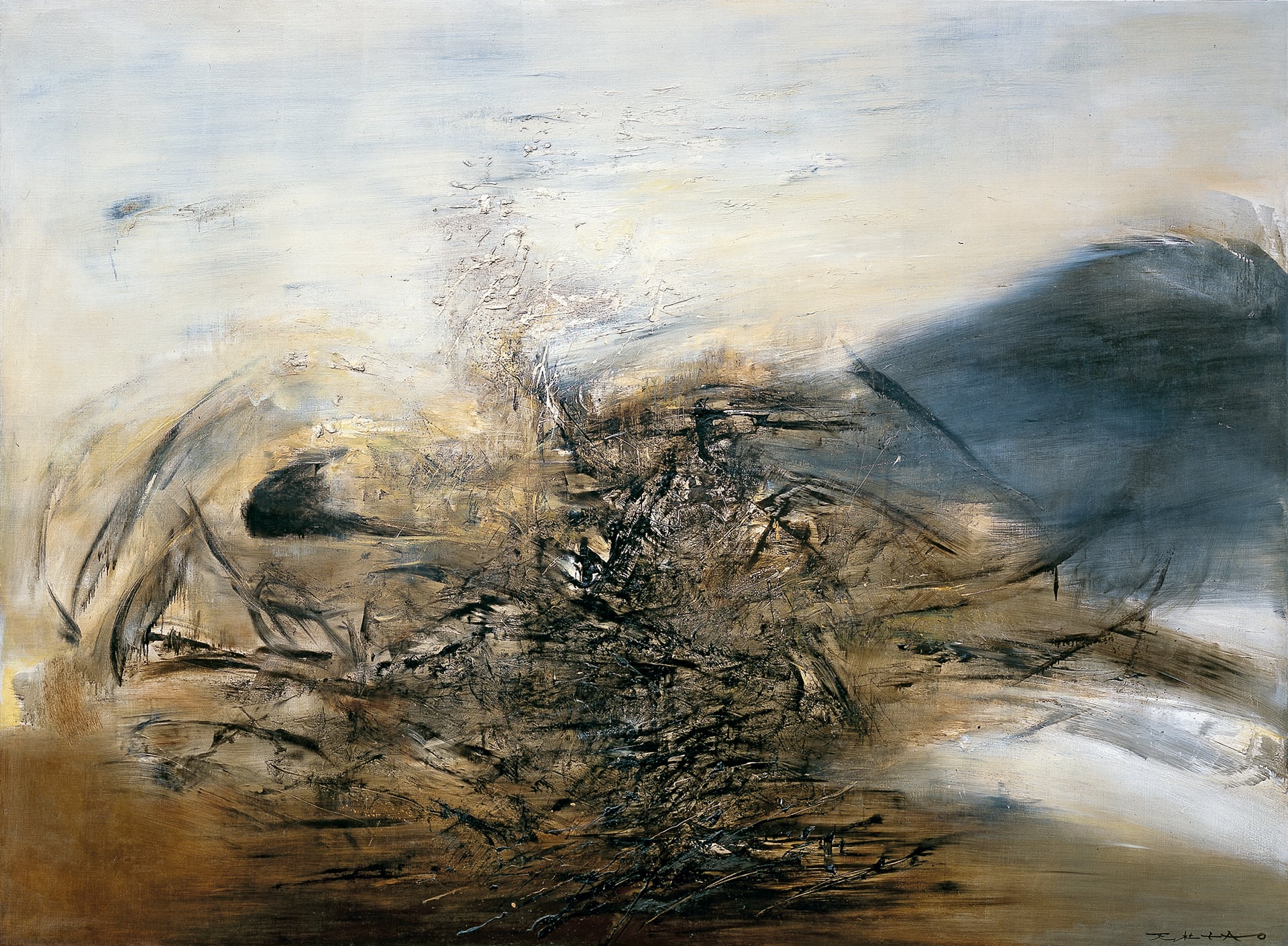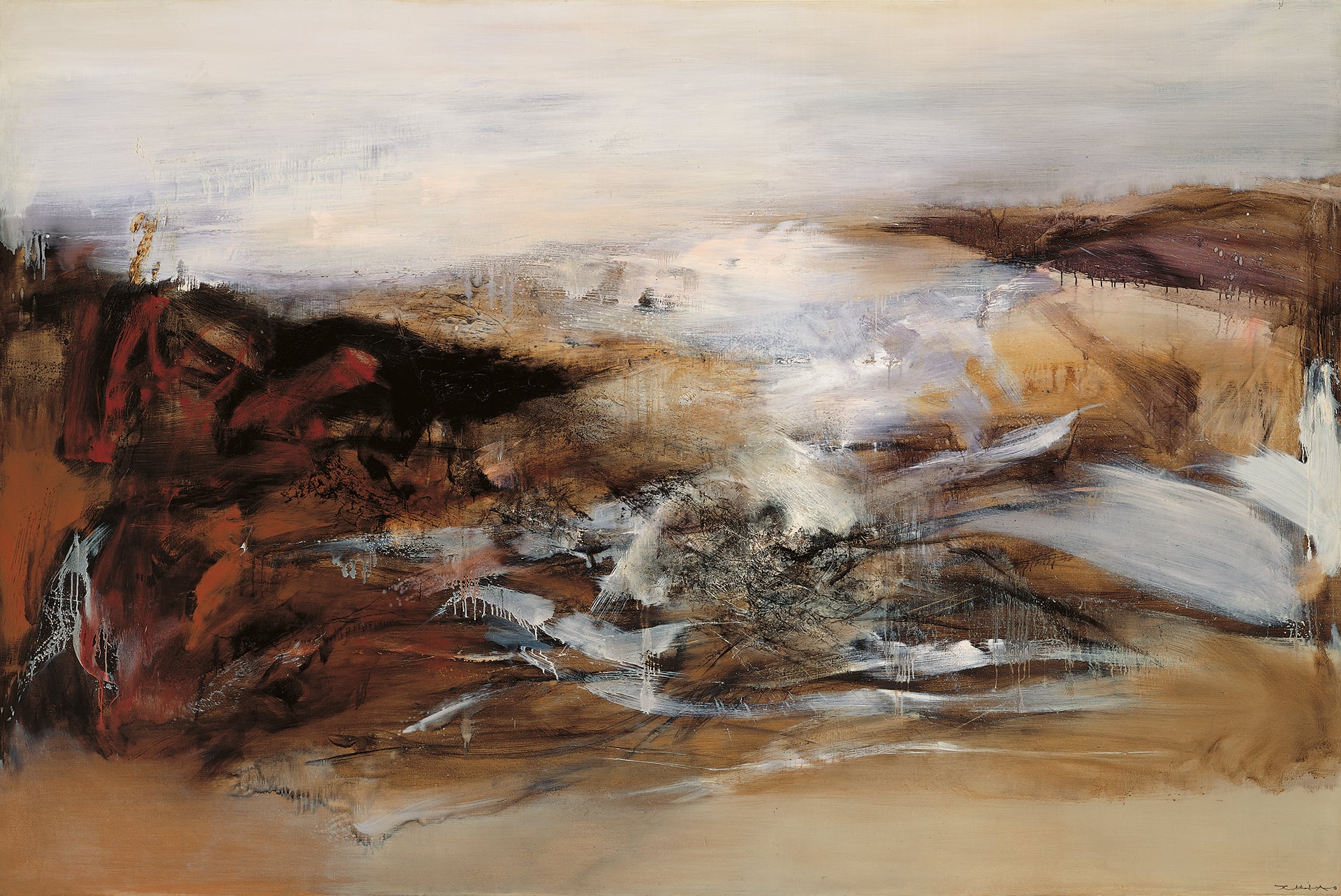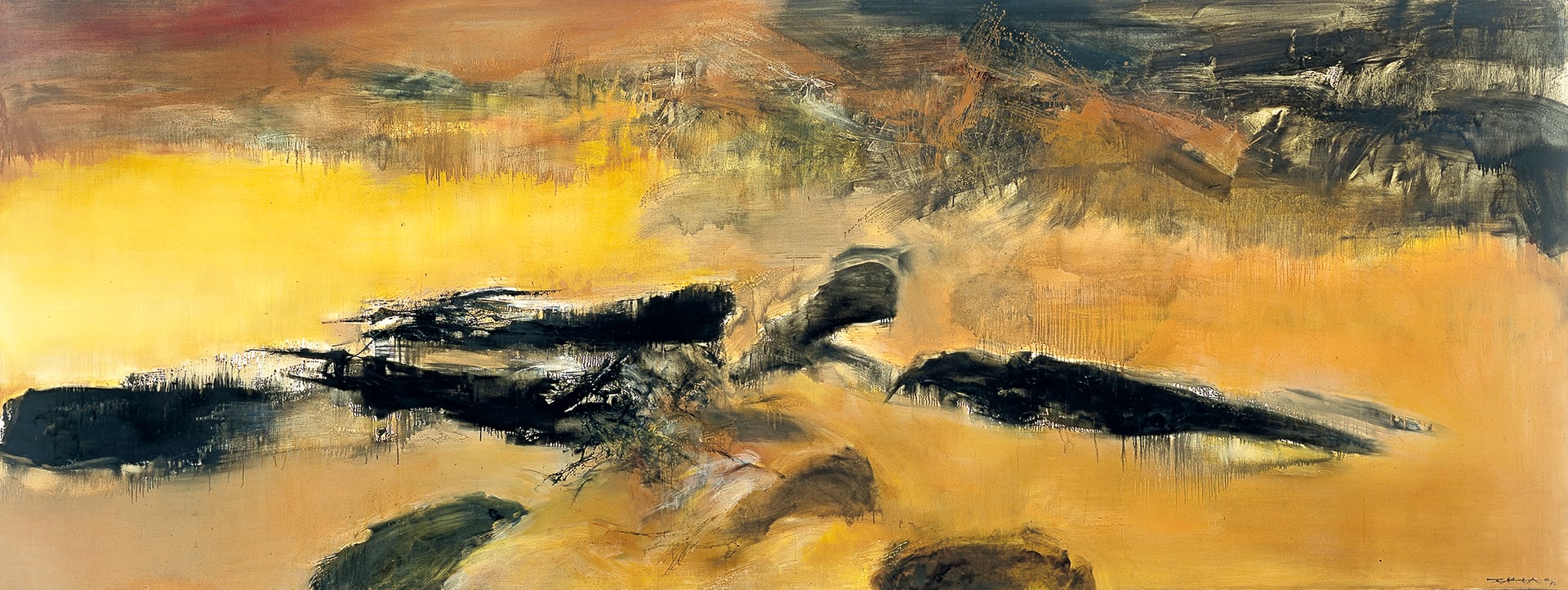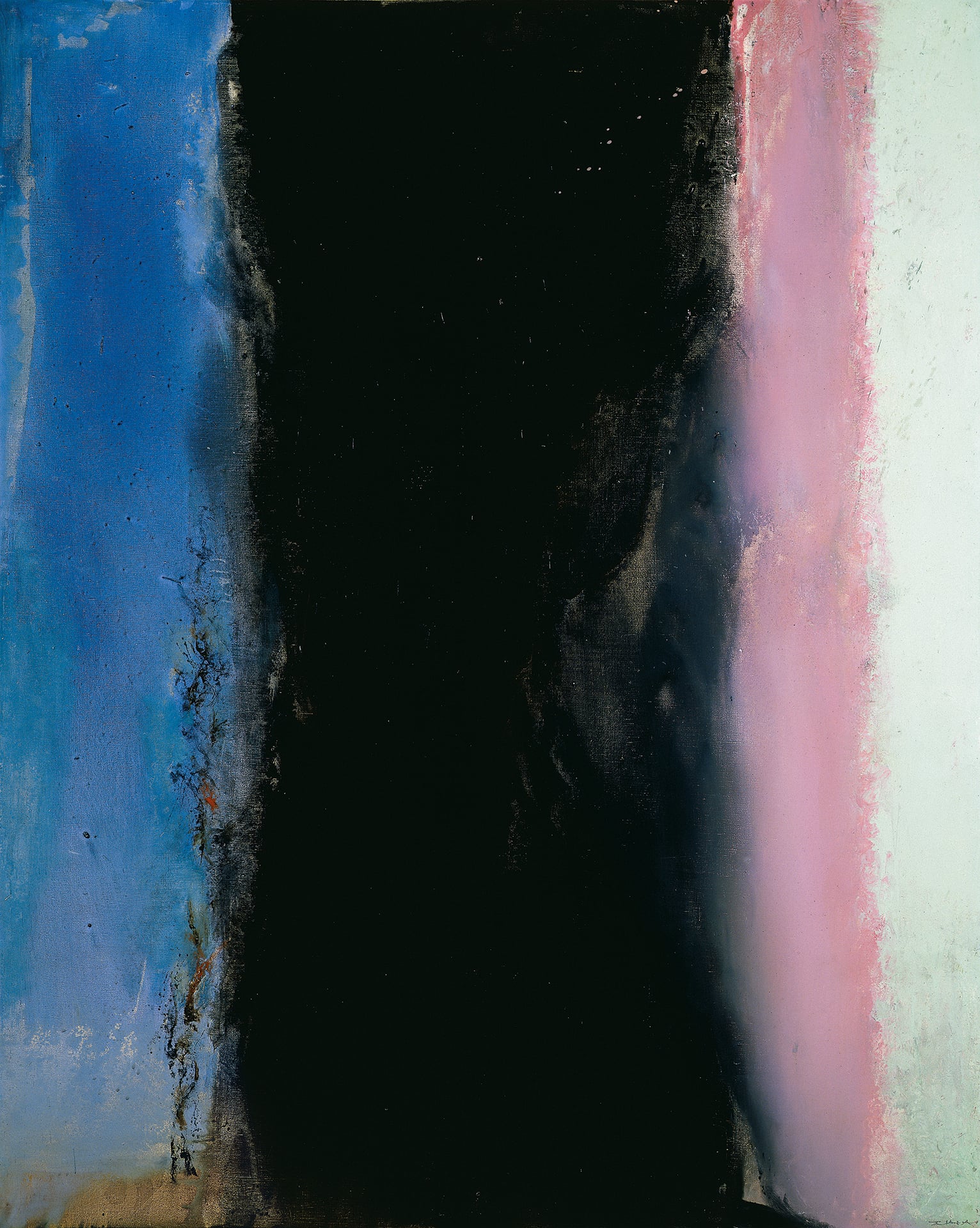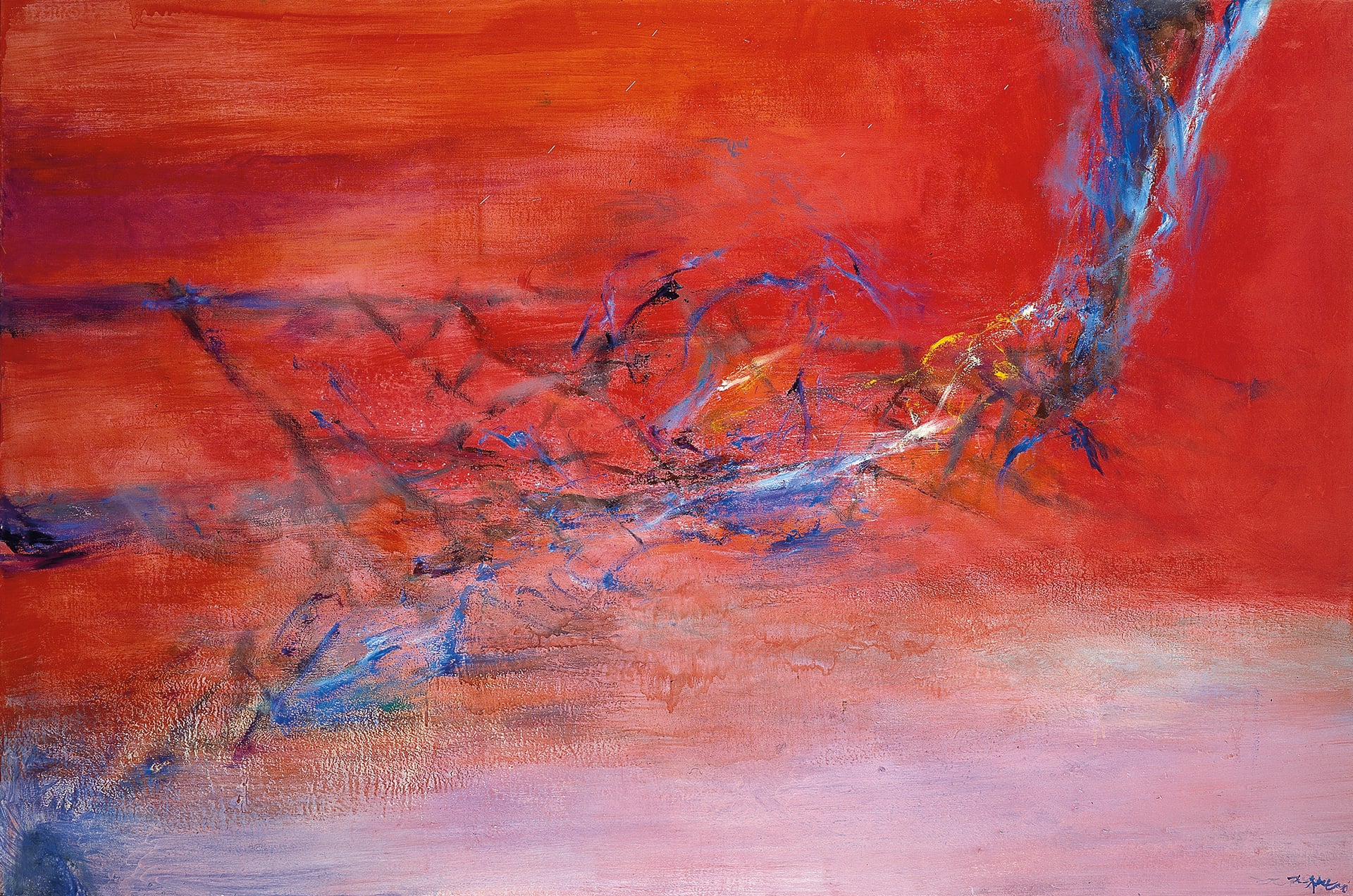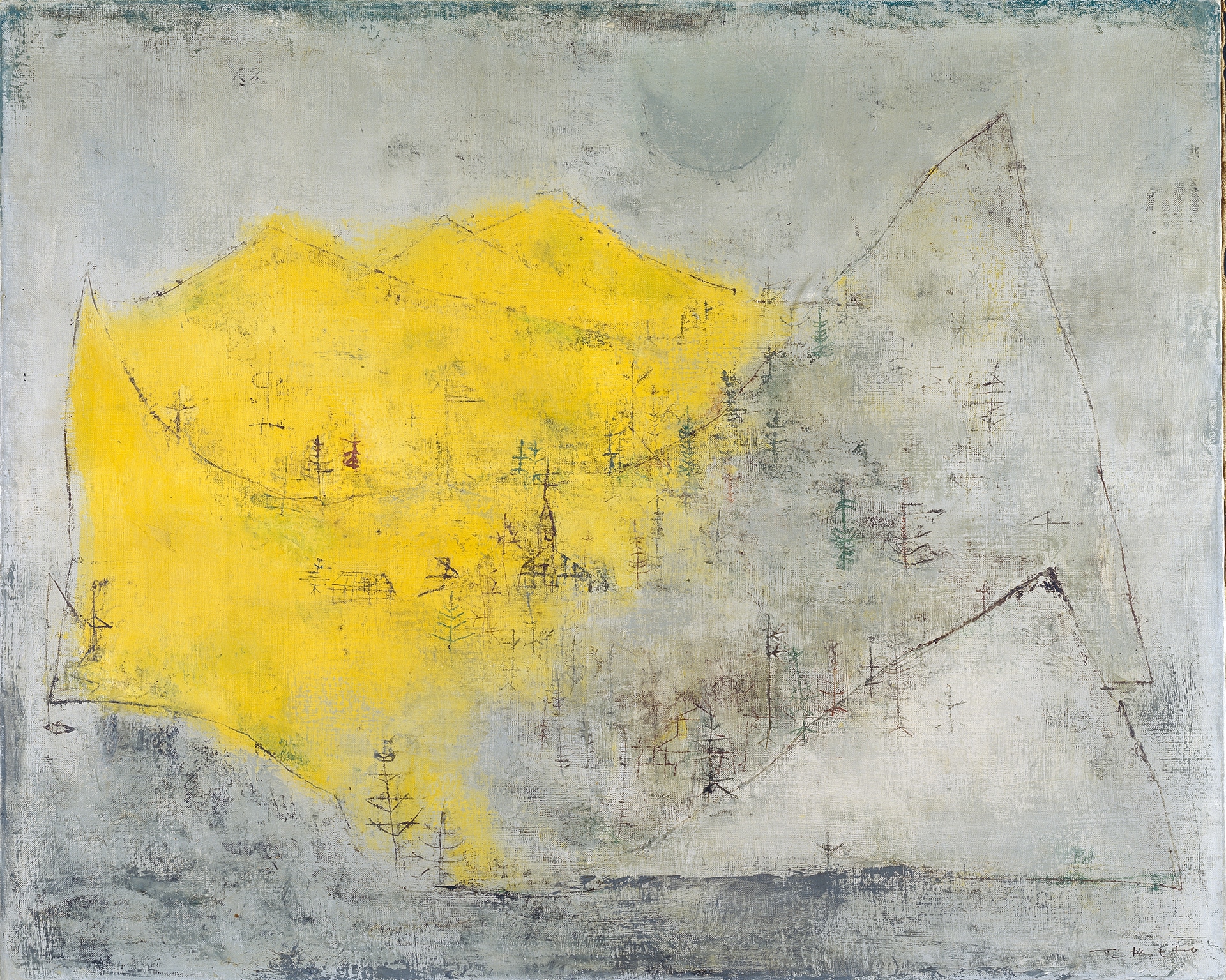
Zao made paintings that feel like weather systems: light gathers, matter fractures, signs hover, and vast spaces open without becoming empty.
1920-1948
Family, calligraphy, and the Hangzhou academy
Zao Wou-Ki was born in Beijing in February 1920 and grew up in an educated banking family in Nantong, north of Shanghai. His grandfather introduced him to the disciplined formation of Chinese characters, while family access to books and reproductions made painting feel like a serious intellectual pursuit. At fifteen he entered the Hangzhou School of Fine Arts, a modern academy where Chinese and European approaches were taught together. When the Sino-Japanese War forced the school inland to Chongqing in 1938, artistic education continued under displacement. Zao graduated in 1941, became an assistant teacher, and held his first solo exhibition. Reproductions of Cézanne, Matisse, and Picasso gave him a distant but powerful model of modern art. By 1946, twenty of his works had already been shown at the Cernuschi Museum in Paris.1948-1956
Paris and the escape from subject matter
In February 1948 Zao left Shanghai with his first wife, the artist and composer Lalan. After thirty-six days at sea they reached Marseille and then Paris. He visited the Louvre, studied French, attended the Académie de la Grande Chaumière, and worked in Montparnasse near Alberto Giacometti. A first Paris exhibition followed in 1949, alongside an expanding practice in lithography. The poet Henri Michaux became a close friend and helped connect him with gallerist Pierre Loeb. During a 1951 visit to Switzerland, Zao encountered Paul Klee's symbolic paintings and found a way beyond direct representation. Still lifes and landscapes gave way to invented signs, imagined writing, and fields of atmosphere. Vent, painted in 1954, is often identified as the moment when the depicted subject almost entirely disappeared.1957-1969
Large scale, New York, and an international language
Zao's first exhibition at Galerie de France in 1957 coincided with a decisive enlargement of his canvases. Later that year he traveled to New York, where he met artists including Franz Kline, Philip Guston, Adolph Gottlieb, and William Baziotes. He admired the physical immediacy of American painting, but his own work did not simply become Abstract Expressionist. Its open space, suspended marks, and shifting voids remained connected to Chinese landscape and calligraphic structure. The Kootz Gallery gave him annual New York exhibitions from 1959 to 1965, while museums in Europe, North America, and Japan began to collect and show his work. With support from André Malraux, Zao became a French citizen in 1964. The large dated paintings of the decade established his mature language: pressure, light, and movement without a fixed horizon.1970-1985
Loss, ink, and renewed contact with China
In 1971, encouraged by Michaux, Zao returned seriously to Chinese ink, a medium whose unforgiving speed demanded a different balance of control and accident. The following year his second wife, May, died after a long illness. Zao traveled to China for the first time since 1948, then slowly resumed painting in Paris. En mémoire de May transformed private grief into a monumental field more than five meters wide. During the later 1970s he made increasingly large canvases and triptychs, while Pierre Matisse renewed his connection to New York. He taught mural painting in Paris from 1980 and received a major Grand Palais exhibition in 1981-82. Visits to China followed, including exhibitions in Beijing and Hangzhou in 1983 and a month of teaching at his former academy in 1985.1986-2013